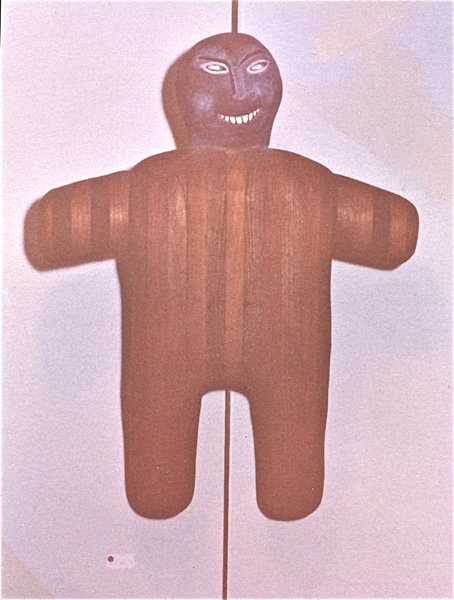
Category

Articles

The New York Times: John Canaday, Review

By Articles

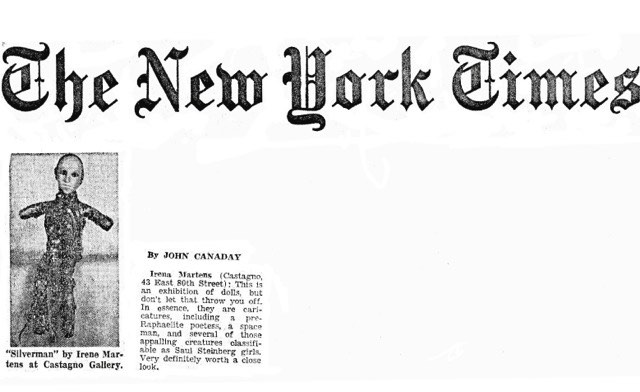
 The-NYTimes-John-Canaday-1-Irena Martens ( Castagno, 43 East 80th Street) 1966 :

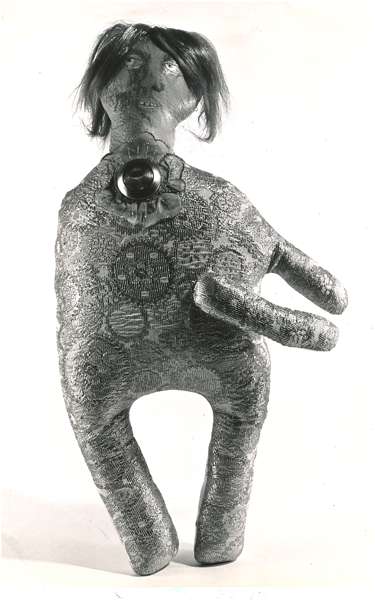
This is an exhibition of dolls, but don’t let that throw you off.

In essence, they are caricatures, including a pre-Raphaelite poetess, 

  A spaceman, and several of those appalling creatures classifiable as 

Saul Steinberg girls.

  Very definitely worth a close look.

McCalls – 1966 “Sight and Sound”

By Articles, Reviews

McCallsLenore Hershey


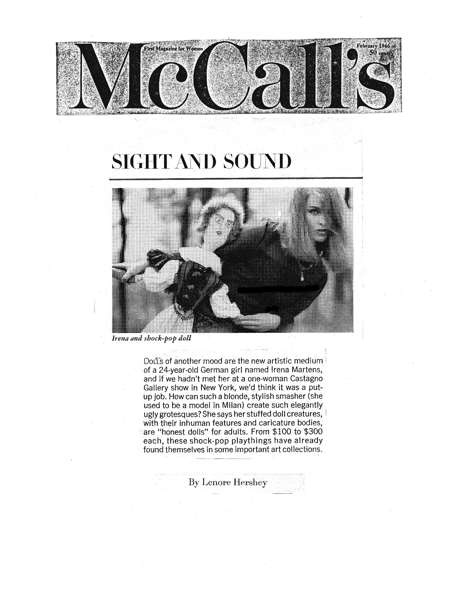
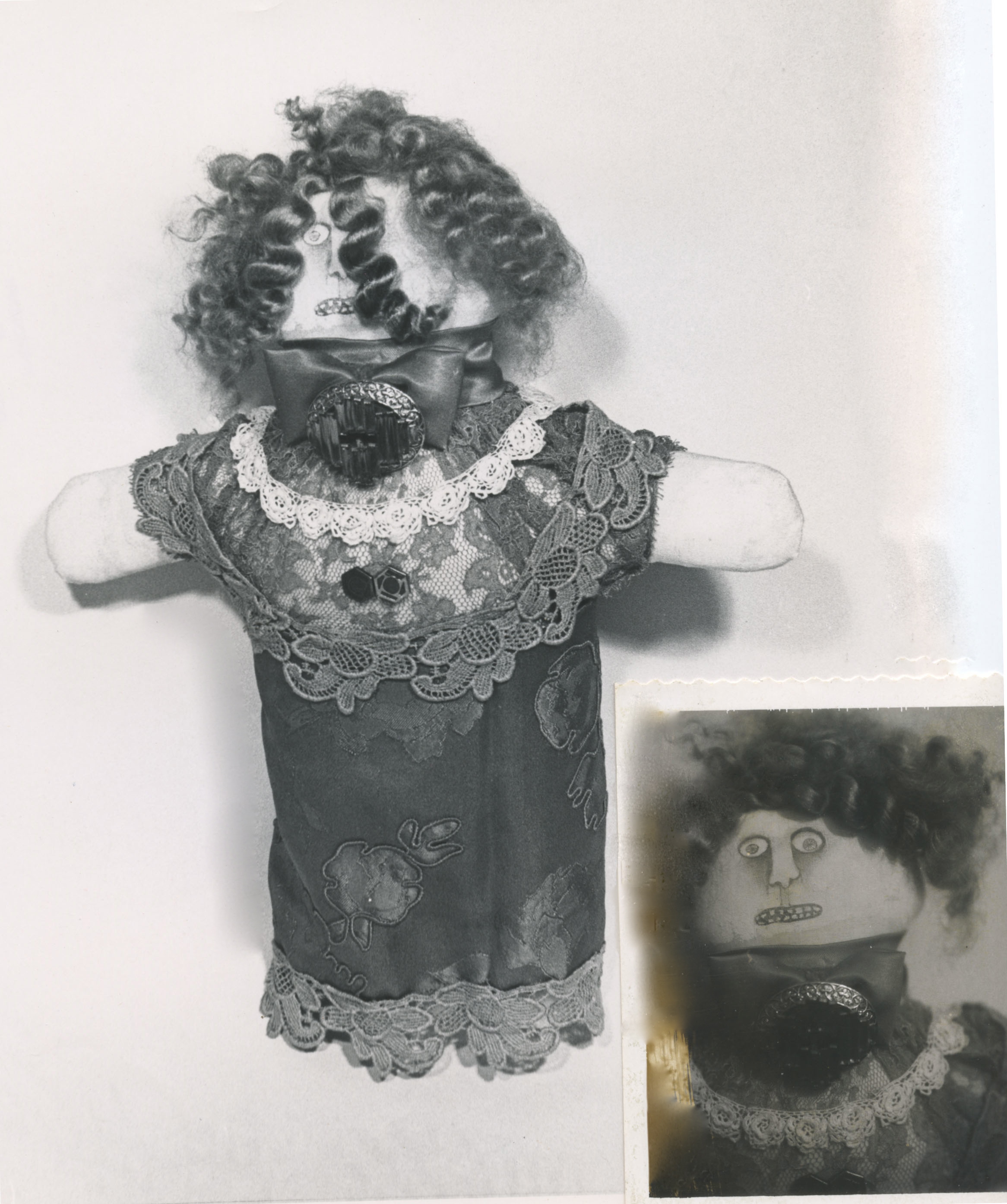
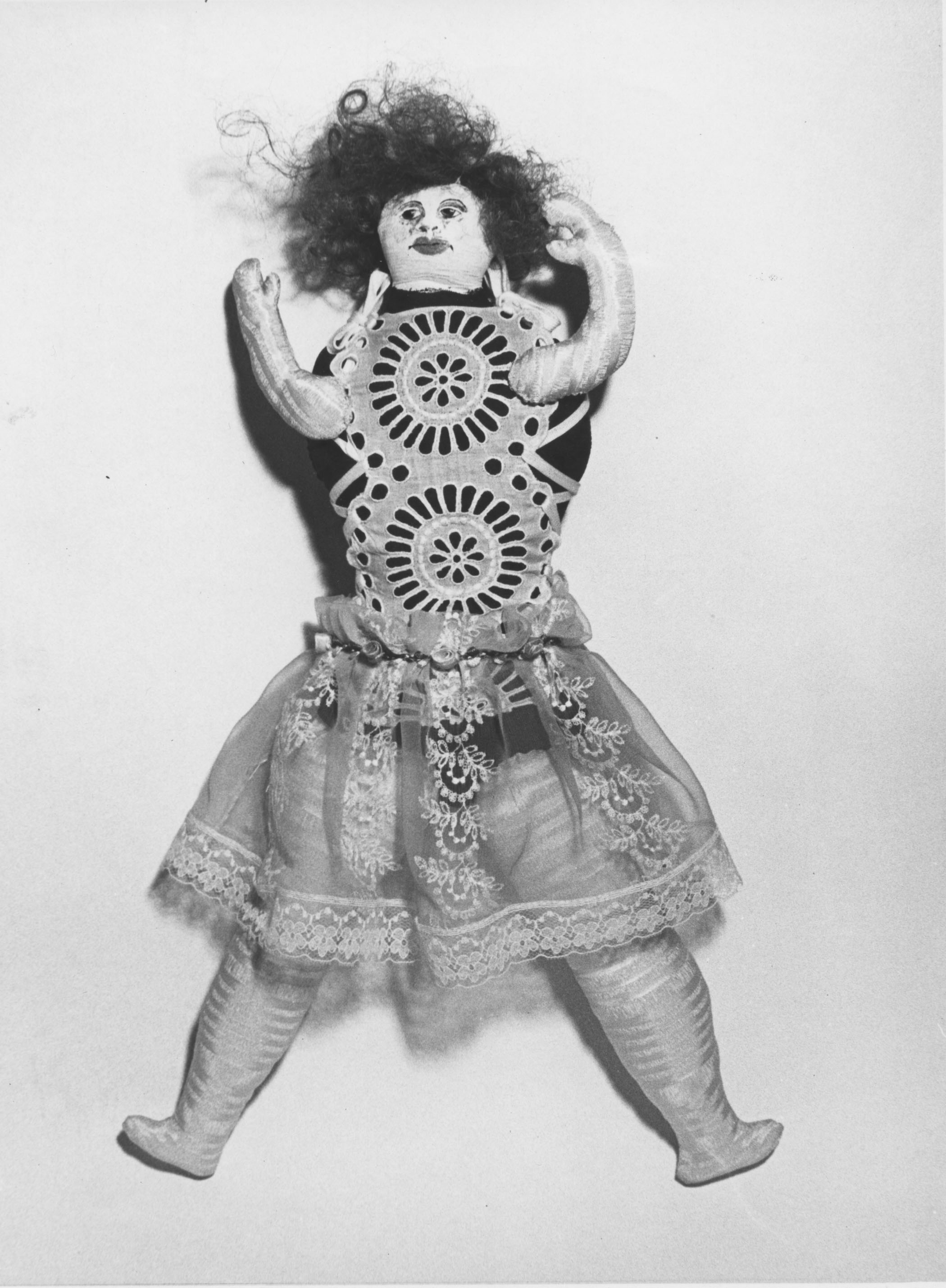
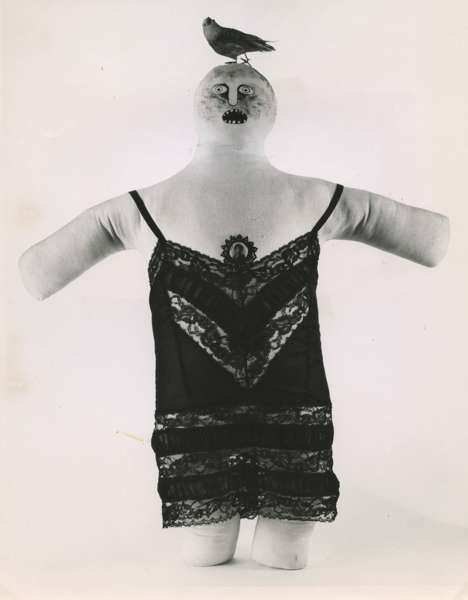
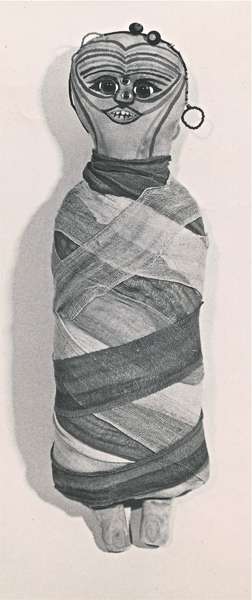
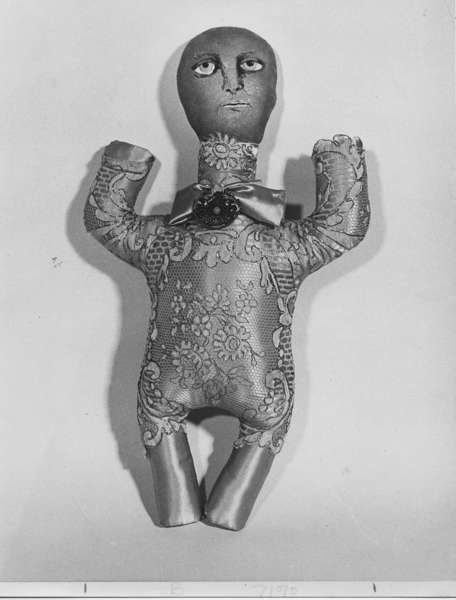
  Dolls of another mood are the new artistic medium of a 24-year-old German girl named Irena Martens, and if we hadn’t met her at a one – woman  Castagno Gallery show in New York, we’d think it was A put-up  job. How can such a blonde, stylish smasher ( she used to be a  model in Milan) create such elegantly ugly grotesques? She says her stuffed doll creatures , with their  inhuman Features and caricature bodies  are “honest dolls”. These shock-pop playthings have already found themselves in some important art collections.


IM-w

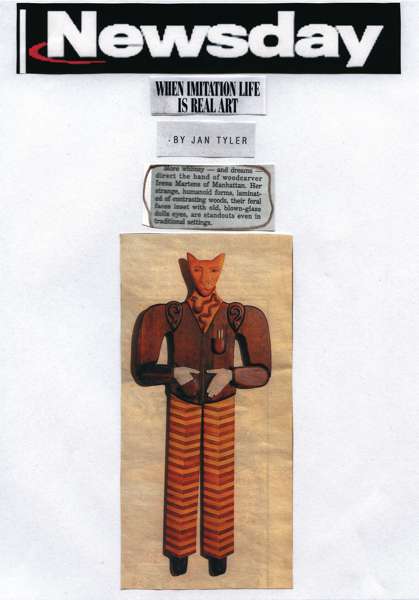
Newsday “WHEN IMITATION LIFE IS REAL ART”

By Articles

Newsday-When-Imitation-Life-is-real-Art-jan-Tyler-Art-1-by JAN TYLER


  More whimsy – and dreams – direct the hand of Woodcarver Irena Martens of Manhattan. Her strange humanoid forms, laminated of contrasting Woods, their feral faces inset with old, blown-glass dolls  eyes, are standouts even in traditional settings.


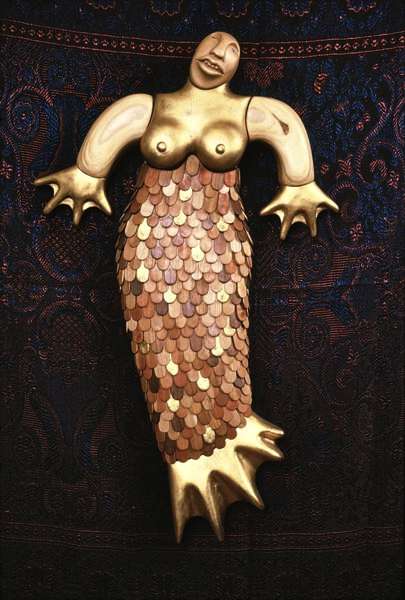
Irena-Martens-Sculpture-MaermaidIrena-Martens-Sculpture-wIrena-Martens-Sculpture-Strawcritter-2-

Ecstasy at Honey Sharp

By Articles, Reviews

The Berkshire EagleIrenaMartensTheBerkshireEagle6
Art Review-1979
Winifred Bell

I was impressed with Irena Martens’ relief sculpture last year; this year I am ecstatic.

Her total production since last summer consists of just five works: each more imaginative than the one before. Each is a life size female figure cut from smoothly finished pieces of plywood that fit together like clothing patterns. Martens’ head is obviously filled with an encyclopedia of art history. She plucks imagery from myriad sources and adapts it to her own unique needs.

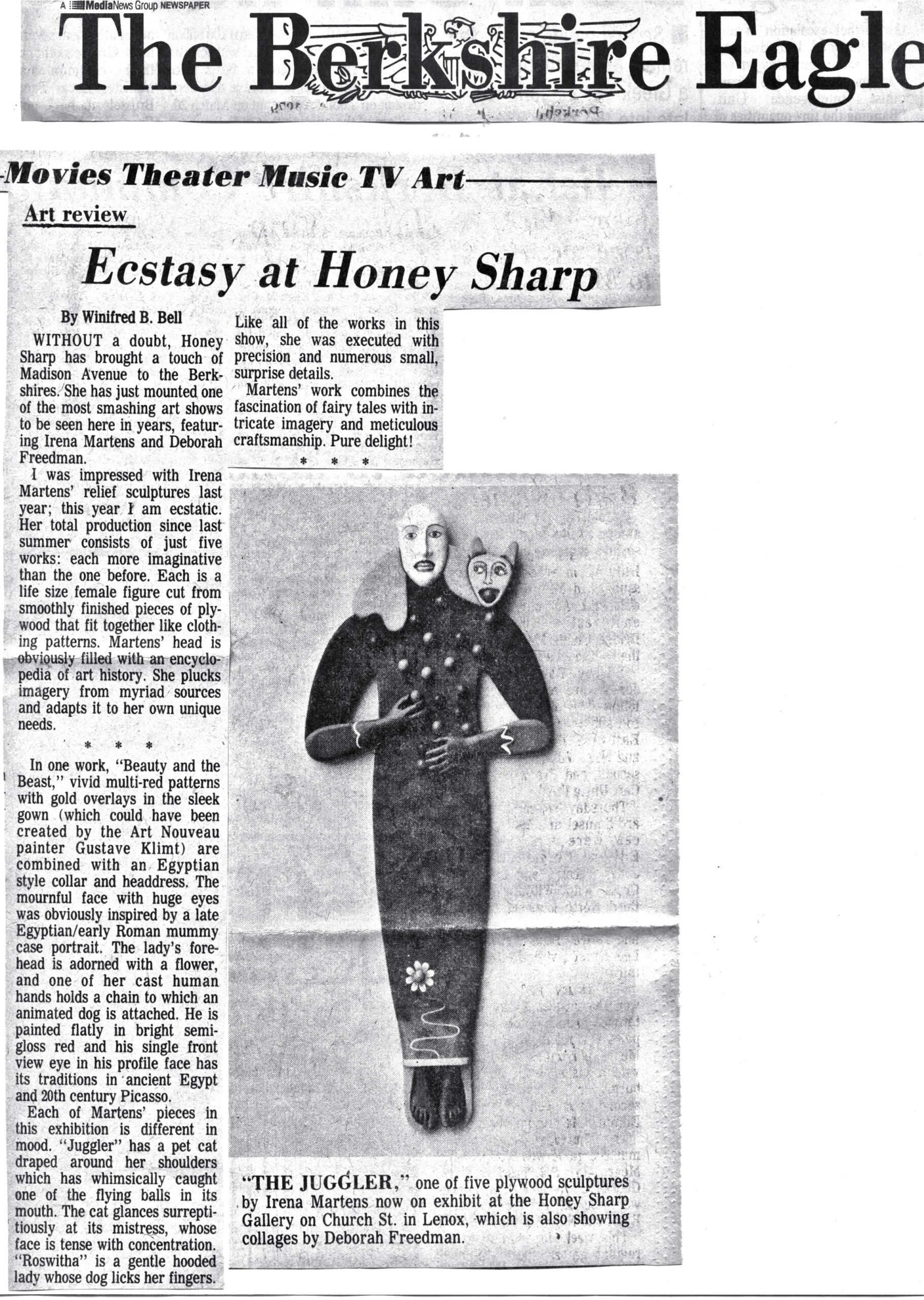
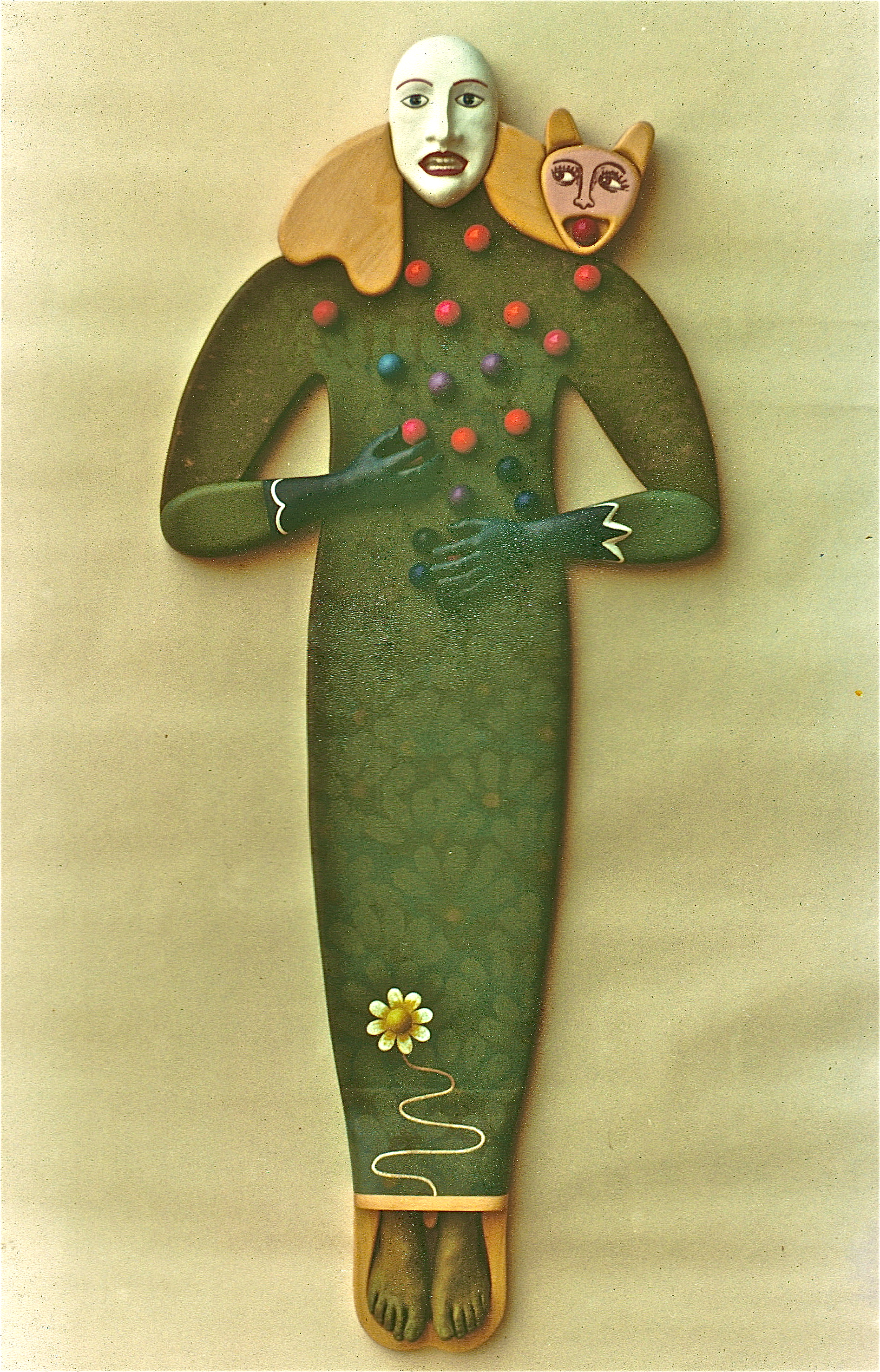
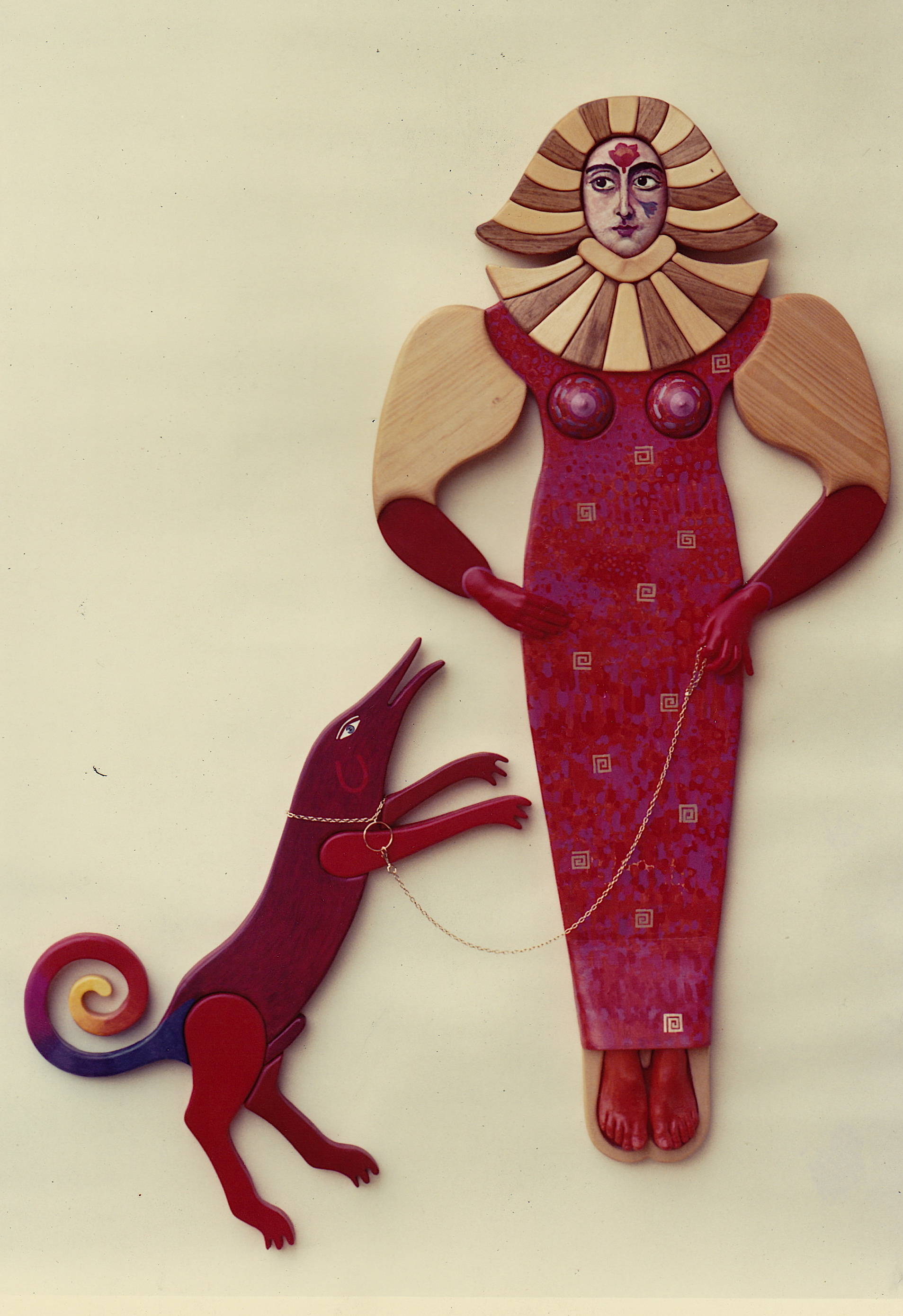
Irena Martens:Sculpture " The Juggler"   In one work, “Beauty and the Beast,” vivid multi-red patterns with gold overlays in the sleek gown (which could have been created by the Art Nouveau painter
Gustav Klimt) are combined with an Egyptian  style collar and headdress .The mournful face with huge eyes was  obviously inspired by a late Egyptian –early roman mummy case portrait. The lady’s forehead is adorned with a floer, and one of her cast human hands  holds a chain to which an animated dog is attached. He is painted flatly in bright semi gloss red and his single front view eye in his profile face has its traditions in ancient Egypt and 20th Century Picasso.

Sculpture "Dog licking hand"   Each of martens’ pieces in this exhibition is different in mood. “Juggler” has a pet cat draped around her shoulders Irena Martens:Sculpture "Egyptien Lady with dog"which has whimsically caught one of the flying balls in its mouth. The cat glances surreptitiously at his it’s mistress, whose face is tense with concentration.

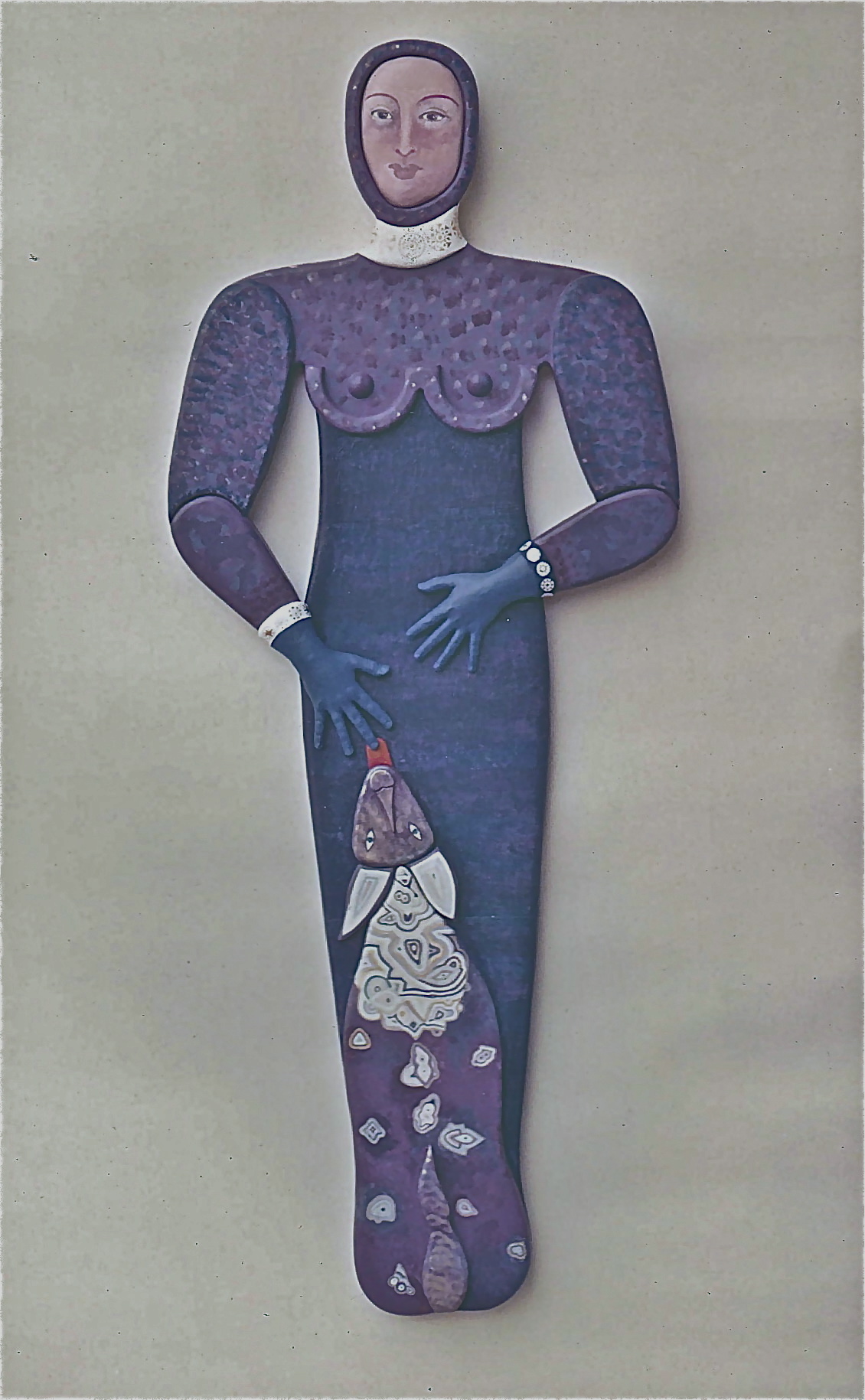
   “Roswitha” is a gentle hooded lady whose dog licks her fingers.

Like all of the works in this show, she was executed  with precision and numerous small, surprise details.

    Martens’ work combines the fascination of fairy tales with intricate imagery and meticulous craftsmanship. Pure Delight !


Of Dolls and Docents

By Articles

The Berkshire EagleIrena-Martens                                  The-Berkshire-Eagle-Irena-Martens                                  The-Berkshire-Eagle-

Lisa Vossbergh August 1977
“Of Dolls and Docents”

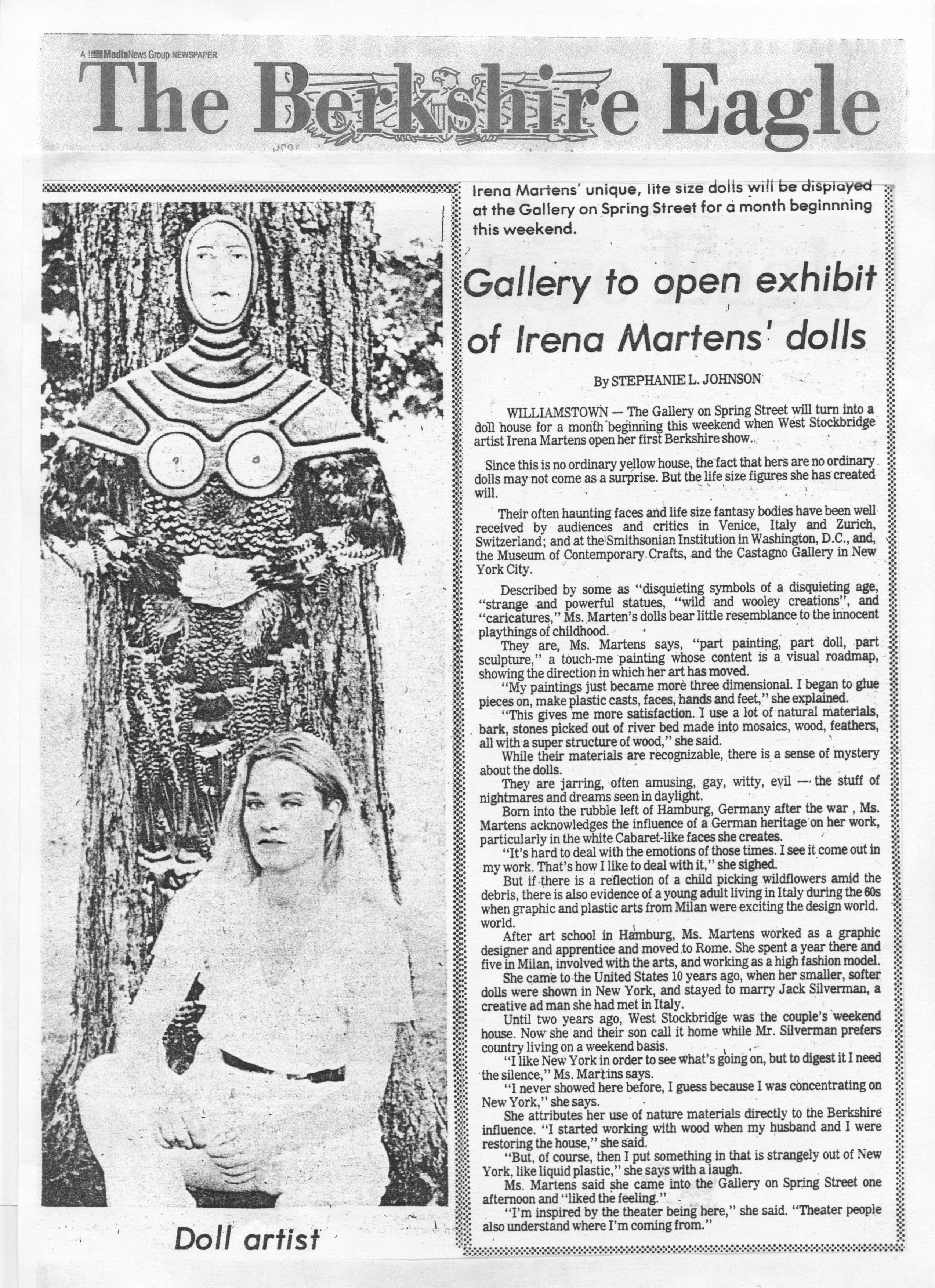
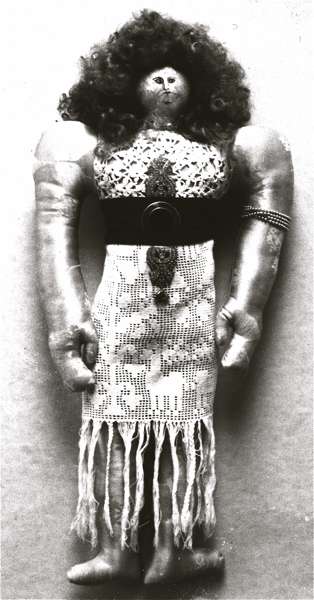
Downstairs, Irena Martens, who calls herself the Doll Artist, has an unusual exhibit of three -dimensional dolls, ranging from life-size to hugging size. But it’s only the size that would make any of these controversial figures huggable.

Helen Davis said some people thought these figures were frivolous. They appear to be anything but that. There is a certain melodramatic quality in their austere shapes, the dramatic materials accented with dime-store gewgaws. “The show is one of contrasts and opposites, in the imagery and in the materials, showing the duality of man,” says Mrs. Davis.

Irena-Martens-Sculpture-Hermaphrodite-

The big dolls adorn the walls and hang like religious figures. The masklike faces are based on different cultures and the flat bodies contrast with realistically shaped hands and feet.

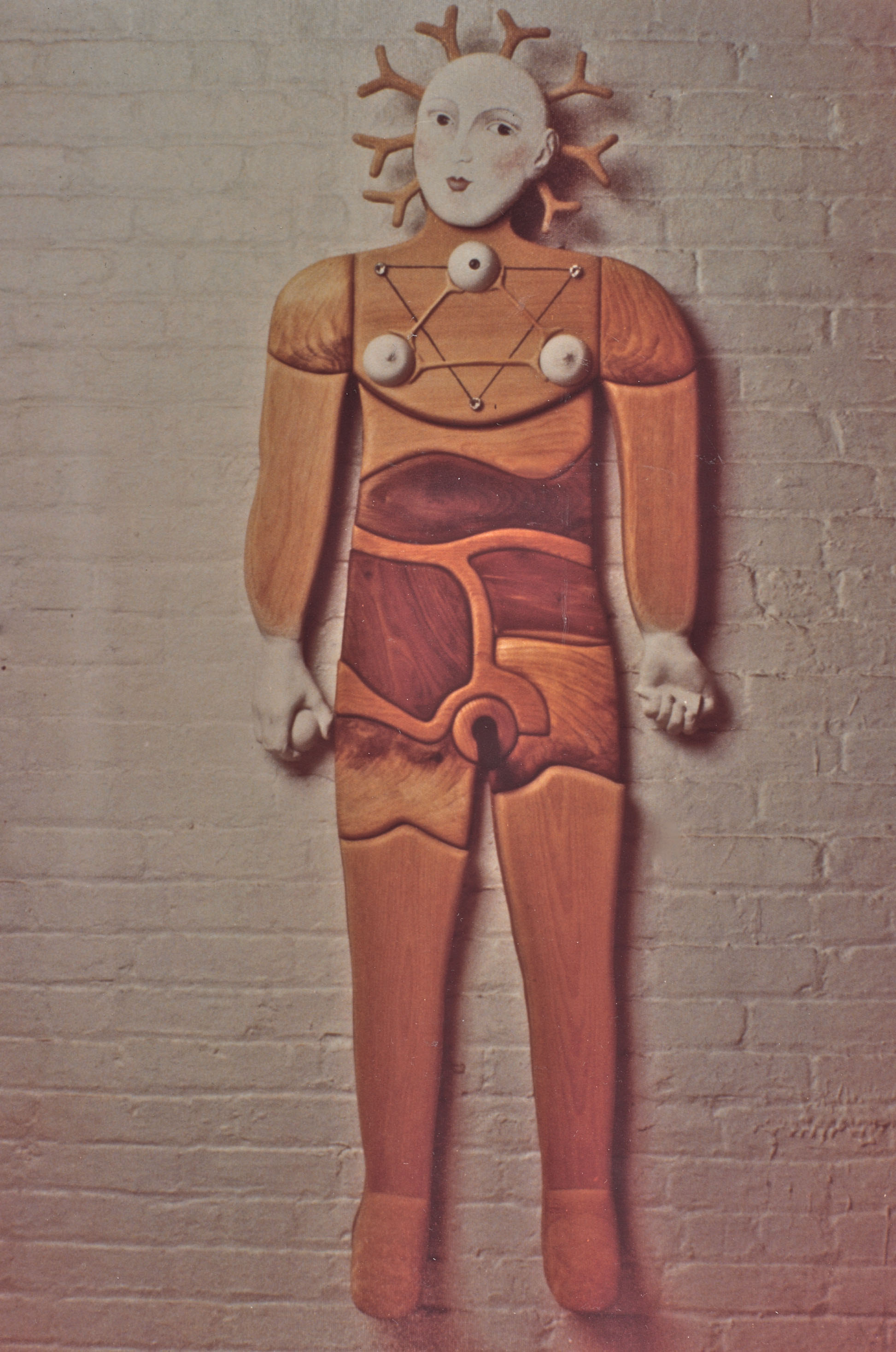
One male figure has a jigsaw-puzzle wooden body, his early Renaissance face surrounded by wooden antlers. Religious and occult symbols such as the Star of David and an eye, adorn his chest. haunting eyes expressing determination, his hand holding a black bird; he sees evil and exposes it, hias wisdom camouflaged behind his flashy array.

The artist was born in Germany and later moved to Italy. German influences are most evident in this doll, reflecting the role of the cabaret presenting the truth in disguised songs.

Other dolls in the collection reflect African, Coptic Christian and Irena-Martens-Pupazzo-28Mesopotamian cultures.

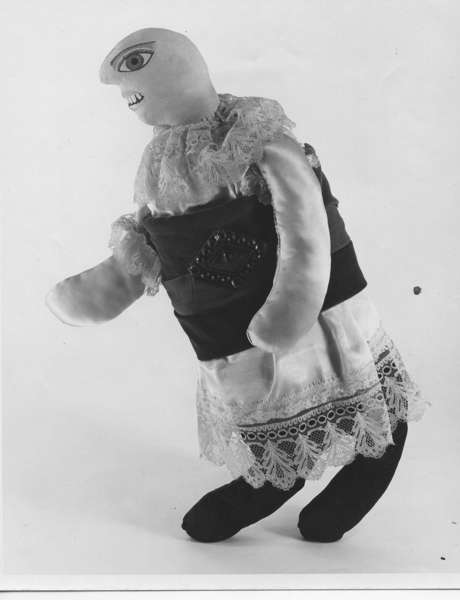
Ms. Marten’s smaller ceramic dolls are plain of set with stones, wood and stuffed cloth. One cloth doll with a painted face and lace skirt comes closest to what one thinks of as a “doll”.

IRENA-MARTENS-Pupazzo-w.wild-hair-and- LacesIn other works, the artists ceramic and painted pictures in odd roundish shapes depict scenes with delightful aspects of flora and fauna intermingled with unpleasant, ugly sights.

This show will run to mid-September and is worth seeing, for pleasure and its unusual quality. 

Surrealism and Ceramics

By Articles, Reviews

The Berkshire EagleTheBerkshireEagle 1
8-19-77
Art review – Winifred Bell
“Surrealism and ceramics”

Irena Martens deals in the stylized human form executed in wood and embellished with oval shaped white plaster faces that come straight out of the early Italian Renaissance.

  These life-size figures are as rigid as architectural columns. Their frontal attitudes are a composite of the beginnings of  many cultural periods; both sophisticated and primitive. They are finished with mystic symbols, meticulously and skillfully achieved.

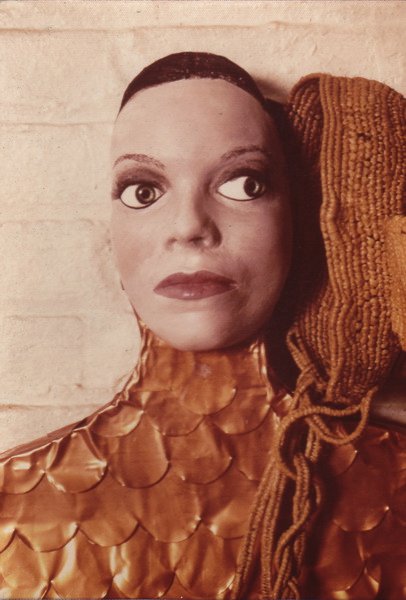
  LadyinArmorcloseupFor example, “Lady in Armor” is covered in neatly scalloped sheets of bronze, mermaid fashion. A basket mask is hinged onto her expressionless pale face and connected to it are a number of raffia ribbons or strings. At the end of each is a tiny graceful bronze hand which rests comfortably somewhere on her metal chest. The hands and their connections form a looping decorative pattern which the lady wears like jewelry.

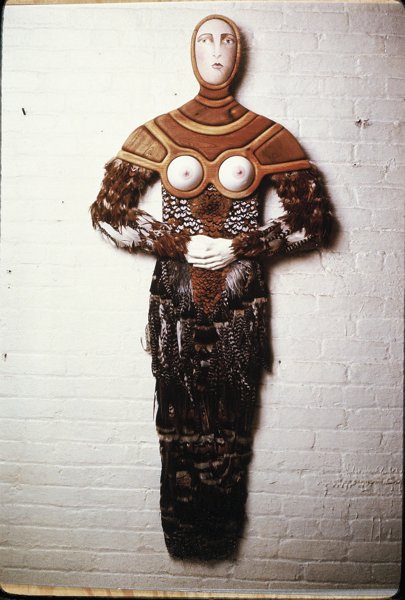
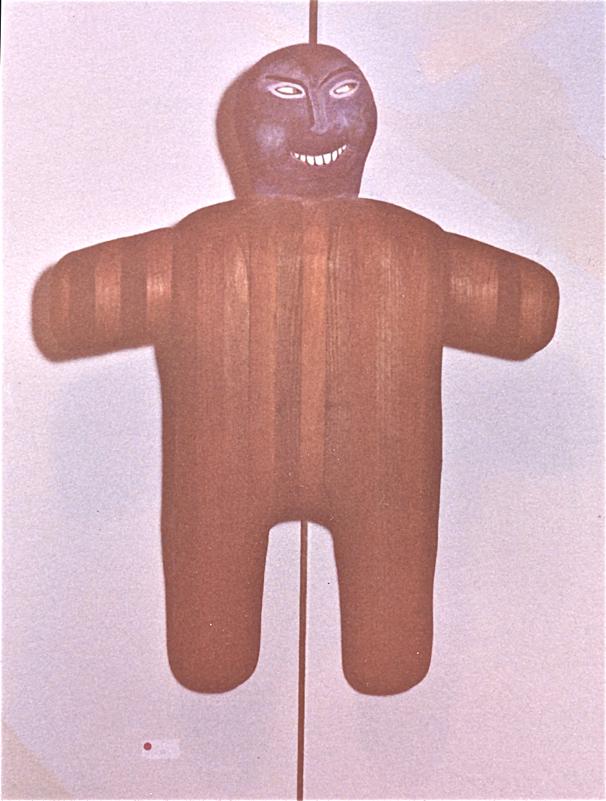
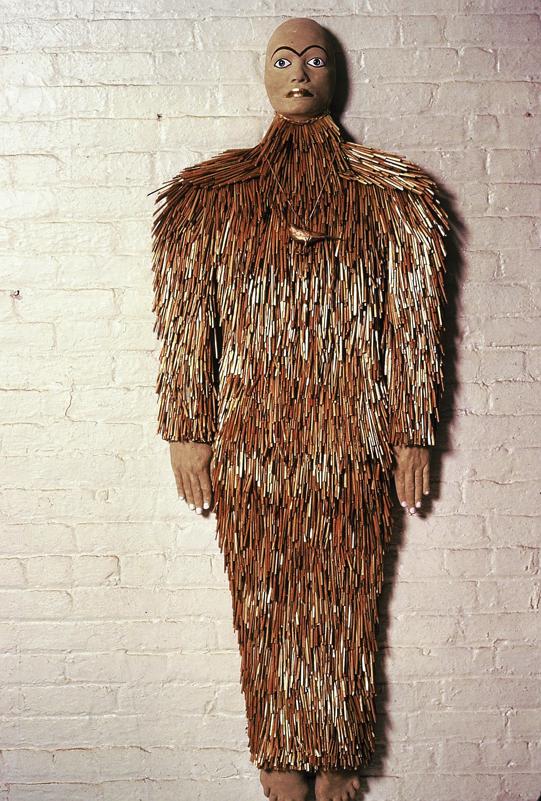
  In many of Marten’s works,, the wood armature is composed of curved pieces that  fit together as a jigsaw puzzle and are carefully sanded so that the natural grain and color  is  apparent. “Lady of Feathers” reminds  me of the magnificent capes the Hawaiians created for their royalty, in which they turned the intricate patterns found in plumage into beautiful geometric arrangements.LadyinArmor


 IMG copy In view of Marten’s biographical information – she was born in Germany and studied throughout Europe- it is not likely that our most western state  had an influence; nevertheless, she arrived at similar imagery.

  Martens changes her idiom somewhat in the figure titled “Cabaret.” A small-headed, huge shouldered man with deep set dark eyes holds a black crow in his hand. He is clothed almost entirely in shimmering buttons. He forbodes evil or perhaps he is meant to combat it.


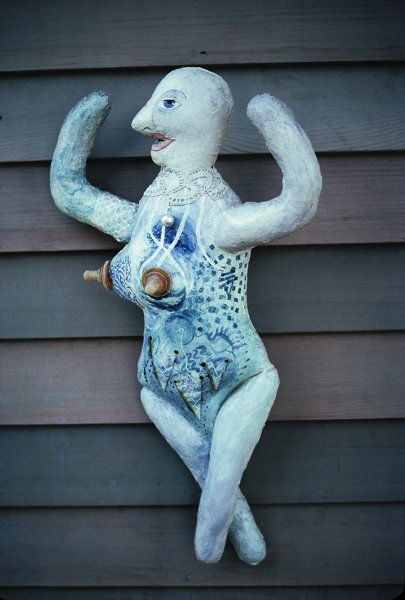
There are also several smaller pieces  on display. “Doll Mother” with commercial baby bottle nipples in the correct  anatomical  locations and “The Leer” with an unbelievable smile are particularly interesting.

SculptureRoswithaSoft Sculpture Pupazzo6Sculpture1978​


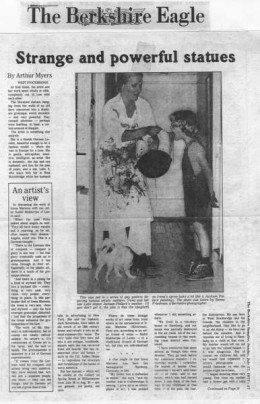
Strange and powerful Statues

By Articles

The Berkshire Eagle

Eagle-A-Myers#1

July 1977

Arthur Myers


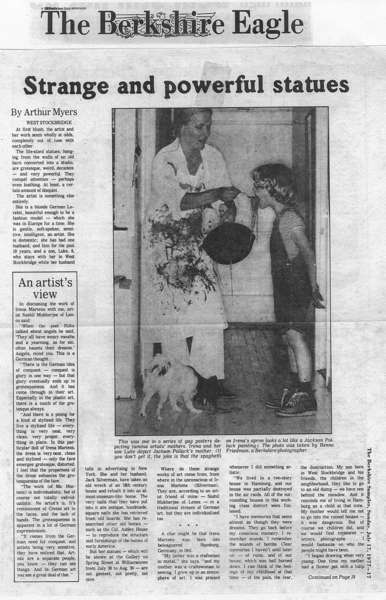
At first blush , the artist and her work   seem  wholly at odds, completely out of tune with each other.

The life-size statues, hanging from the walls of an old barn converted into a studio ,are  weird, decadent  – and very powerful. They compel attention – perhaps even loathing. At least , a certain amount of disquiet. The Artist is something else entirely.

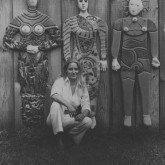
She is a blonde German Lorelei, beautiful enough to be a fashion model – which she was in Europe for a time. She is gentle, soft-spoken, sensitive , intelligent, an artist. She is domestic; she has had one husband, and him for the past 10years, and a son, Luke, 8, who stays with her in West Stockbridge while her husband toils in advertising in New York. She and her husband,  Jack Silverman,  have taken an old wreck of an 18th century house and rebuilt it into an almost-museum-like home. The very nails that they have  put into it are antique , handmade, square nails she has retrieved from old boards. She has researched other old homes – such as the Col. Ashley House- to reproduce  the structure and furnishings of the homes of early America. But her statues – which will be shown on Spring Street in Williamstown- are not genteel, not pretty, not nice. Where do these strange works of art come from, from where in the unconscious of Irena Martens (Silverman). They are , according to an artist friend of mine- Sushil Mukherjee of Lenox- in a traditional stream of German art, but they are individualized too. A clue might be that Irena Martens was born into beleaguered Hamburg, Germany, in 1941 “My father was a Craftsman in metal.” she says “ and my mother was a craftswoman in sewing . I grew up in an atmosphere of art. I was praised whenever  I did something artistic. “We lived in a two –story house in Hamburg Eagle-A-Myers#2and our house was partially destroyed  in the air raids. All the surrounding houses in this working class district were flattened. “I have memories that seem almost as though they were dreams. They go back before my conscious memory. I remember sounds. I remember the sounds of bombs. Clear memories I haven’t until later on – of ruins, and of our house, which was half burned down. I can think of the feelings of my childhood at that time – of the pain, the fear, the destruction. My son here in West Stockbridge and his friends, the children in the neighborhood, they like to go to an old dump – we have one behind our meadow.  And it reminds me of living in Hamburg as a child at that time. My mother would tell me not to go into the ruined houses – it was dangerous. But of course we children did, and we would find treasures – letters, photographs ……would fantasize who the people might have been…… “I began drawing when  very young. One time my mother  had a flower pot with tulips in it. I used to draw everything that was around. I had almost an obsession. I would spend hours on drawing. I drew the tulip from three different sides. My mother said “You did the same picture three different times”. but I said “No it’s different”. I wanted to draw the whole tulip”.
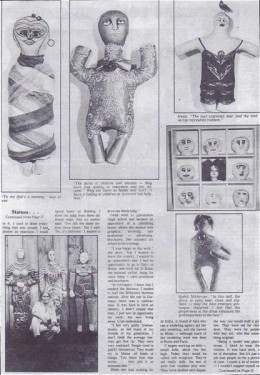
Irena went to Gymnasium, high school and became an apprentice in a Publishing House where she worked with graphics, sales promotional  brochures , advertising. She attended  art school in the evening.  “I was happy in this work” she says , “ but I wanted to leave the country. I wanted to go somewhere else. I had an opportunity to go to Italy, to Rome, and work for Alitalia, the national airline and doing the same thing – sales promotion and brochures. “In retrospect I know  that I needed  the distance . I needed to feel the difference between nations. After the war in Germany  there was a rootlessness . It was hard to form an  identity.  I did not realize it then, I just saw an opportunity for work; but now living away ,  Eagle-A-Myers#3I can understand.  While she was working for Alitalia, a friend of hers who run a modeling  agency got her into modeling and she moved to Milan – although much of her work was done in Rome  and Paris. “I began working on dolls – small dolls, about two feet high. Today they would be called soft sculpture. They are not really dolls, the sort of dolls that children play with. They were stuffed with Kapok, the way you would stuff a pillow. They were not for children. They were for people who buy art, who like something original.”
“Being a model was glamorous . I liked to wear the clothes. It was hard work, a lot of discipline. But it’s just a job that people do for a period of time. I made a lot of money- I couldn’t support myself on my dolls, so that worked out well for me.”

She had a chance to come to New York and show her dolls in a prestigious Madison avenue gallery. She married Jack Silverman, an American  who at the time was doing advertising for Alitalia. Her show was well received by the critics.

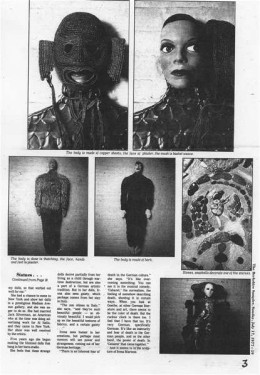
Five years ago she begun making the life size dolls that hang in her barn-studio.

She feels that these strange  dolls derive partially from her living as a child through war time destruction , but also are part of a German  artistic tradition.  But in her dolls, Irena sees also gaiety, which perhaps comes from her stay in Italy.

“The sun shines in Italy”, she says “and they are such beautiful people – so obviously beautiful. I would pick up on the beautiful textures  of fabrics and a certain gaiety.”

Irena sees humor in her  creations, but perhaps most viewers will see power and strangeness coming out of her German heritage.

And it seems to in the sculpture of Irena Martens
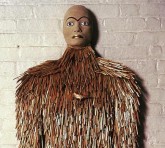
 

Sculpture Straw FigureIrena-Martens-wIrena-Martens-Pupazzo-in-Brocade

Irena-Martens-Pupazzo_with_BirdIrena-Martens-Pupazzo- 20IRENA MARTENS    Pupazzo in Satin

ART NEWS

By Articles, Reviews

ART-NEWS-1-

ART NEWS

Review

1966


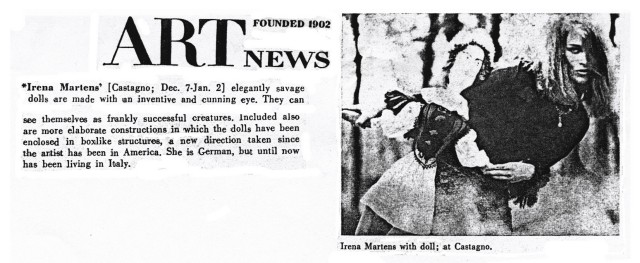
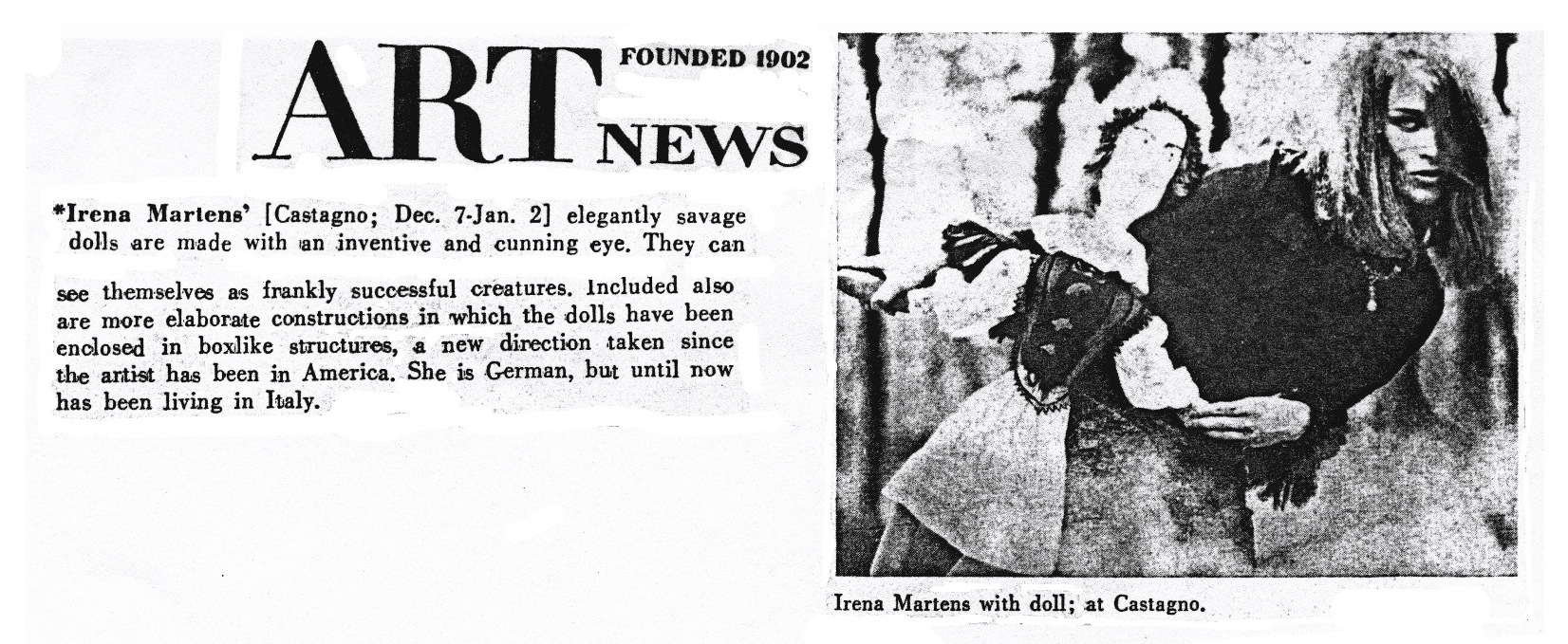
  Irena Martens (Castagno; Dec. 7-Jan 2)

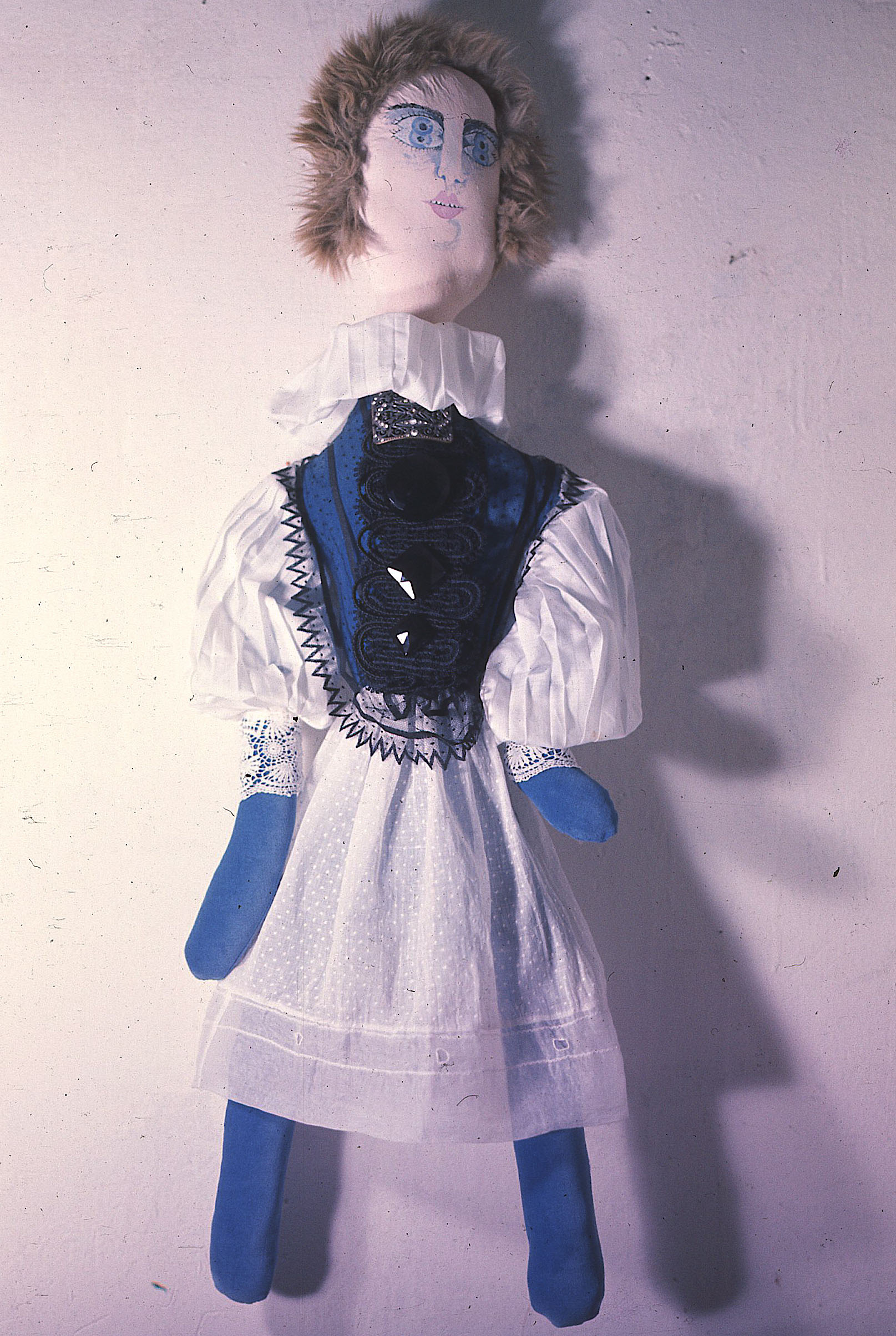
Elegantly savage dolls  are made with an inventive and cunning eye. They can see themselves as frankly successful creatures.

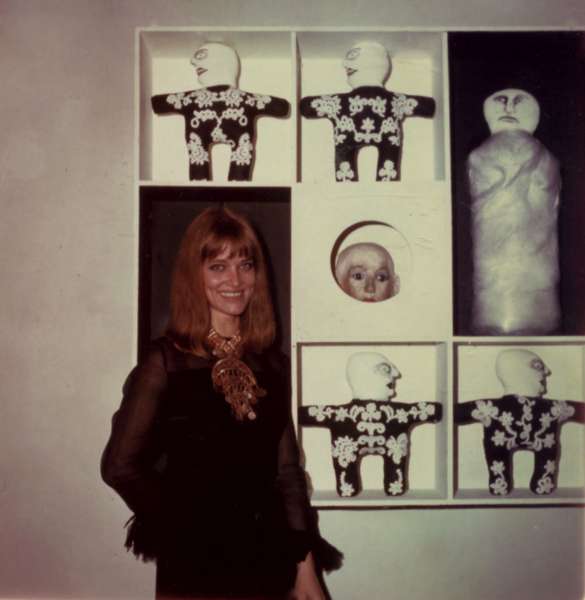
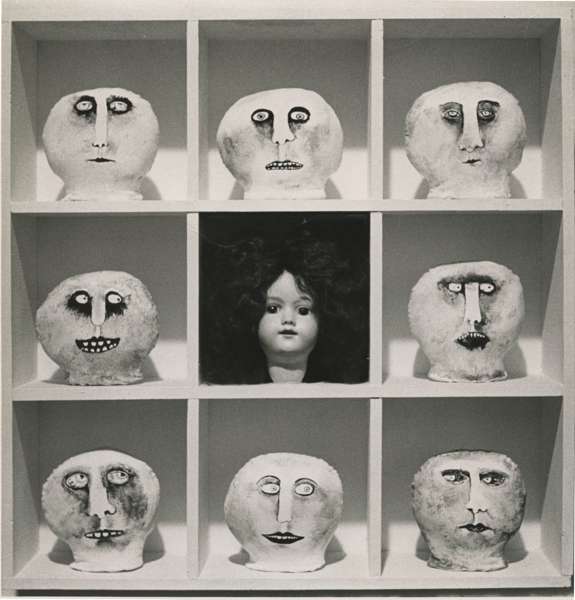
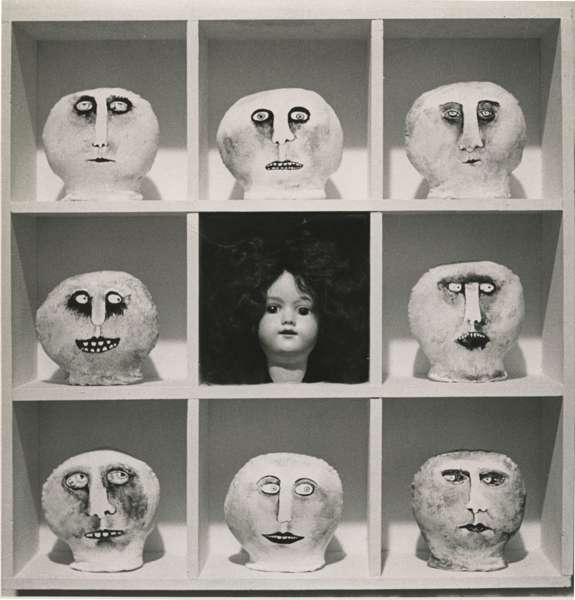
Included also are more elaborate constructions in which the dolls have been enclosed in boxlike structures, a new direction taken since The artist has been in America. She is German, but until now has been living in Italy.


Irena-Martens-Pupazzo-2-

The New York Times – “Dolls are no longer Child’s Play”

By Articles

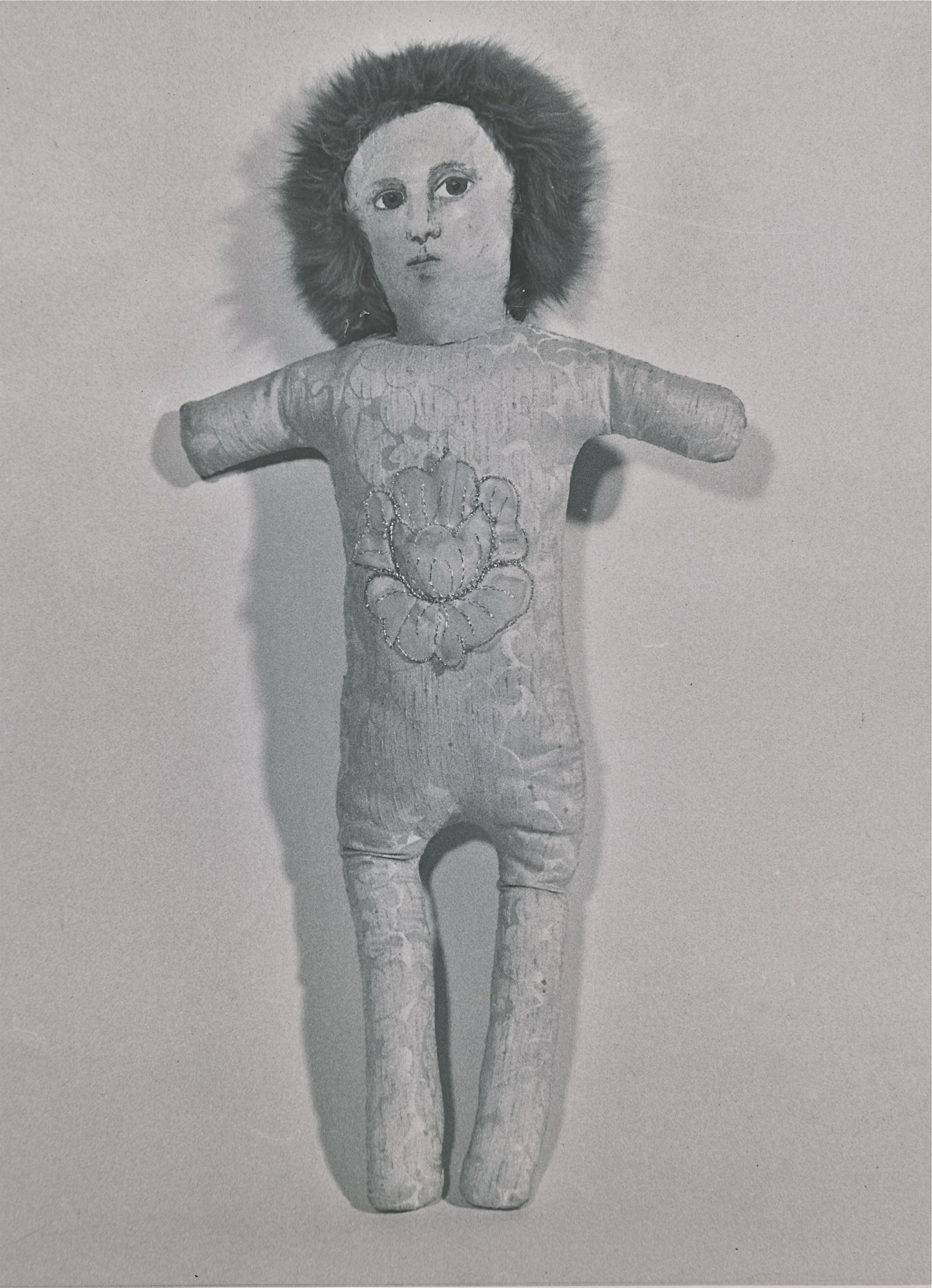
  A showing at the Castagno Gallery last December introduced the work of Irena Martens to New York. Miss Martens a 24-year old artist who was born in Hamburg, NYTimes-review-1-Germany, began making dolls three years ago while living in Milan. 

They were so successful that she gave up her work as a fashion model to concentrate on exploring other materials for her dolls.

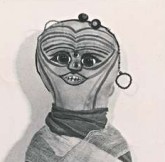
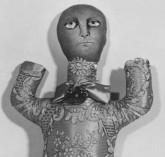
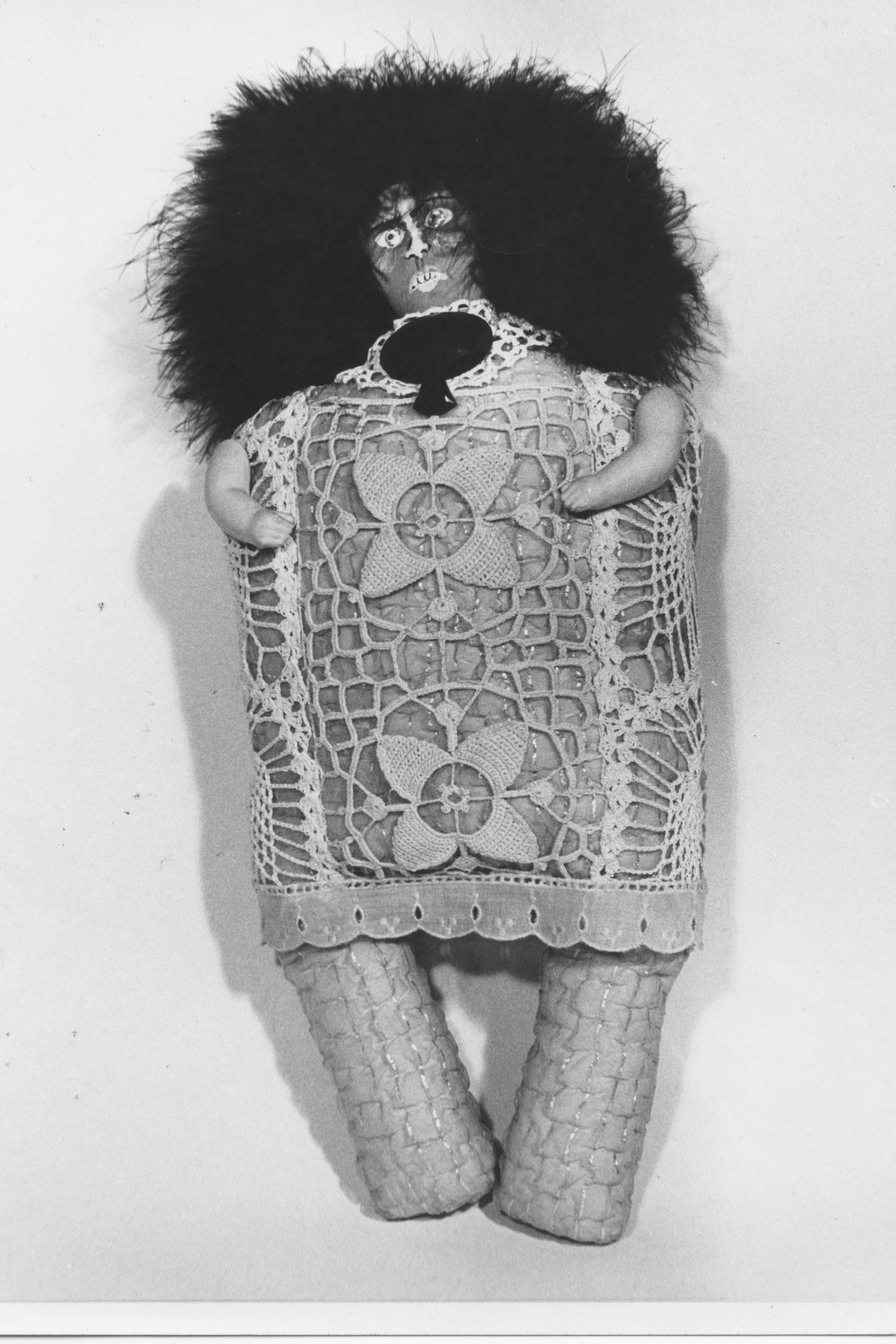
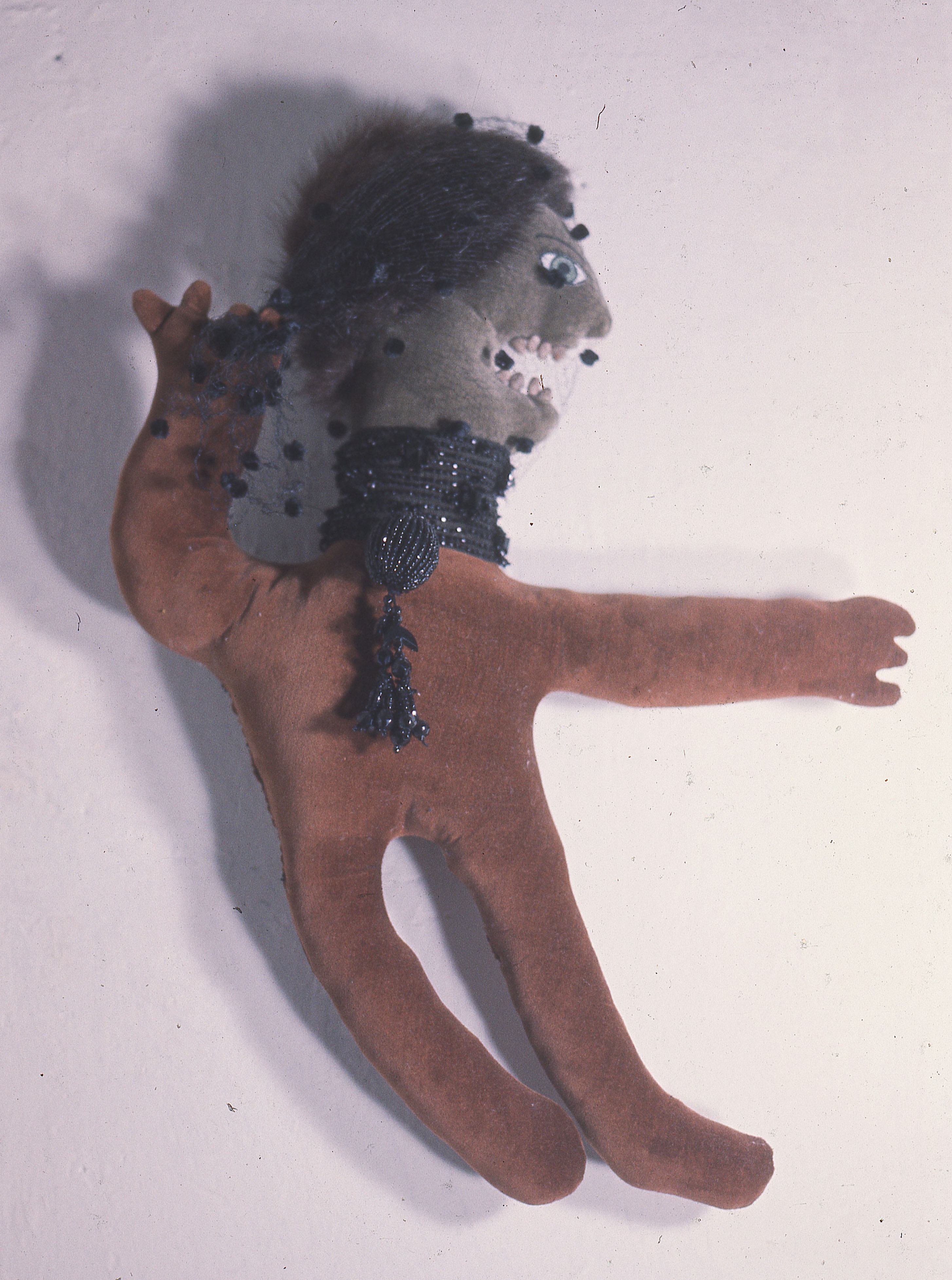
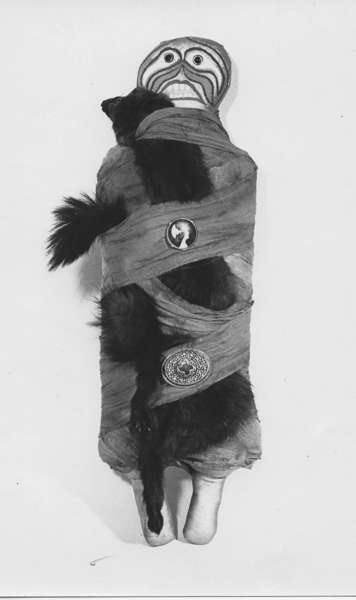
Miss Martens, who works in papier-mache, cloth (stuffed with kapok), leather, feathers and other materials, creates fetishlike dolls that are about a foot tall, although she is now working on life-size figures. The dolls are distinctive for their strong, expertly drawn, faces, the ingenious use of old buttons and junk jewelry in their costumes and the fact that some are closeted in boxes.

  “People Characters”

Miss Marten’s “people characters” as she call them . The Life-size ones are not yet

priced. They may be seen by appointment.


BOX-W Castagno-Gallery-wIrena-Martens-Pupazzo-21-Irena-Martens-Pupazzo- -26--3-

HOUSE & GARDEN

By Articles, Reviews

HOUSE & GARDENHOUSE&GARDEN-1966

Capsule Review

1966


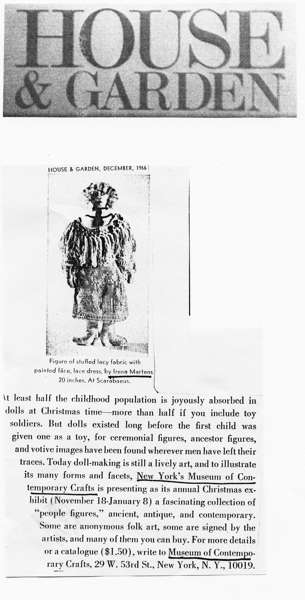
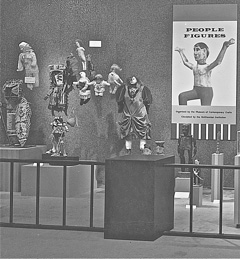
  At least half the childhood population is joyously absorbed in dolls At Christmas- more than half if you include toy solders. But dolls existed Long before the child was given one as a toy, for ceremonial figures, Ancestor figures and votive images have been found wherever men have left their traces. Today doll-making is still a lively art, and to illustrate its many forms. And facets, New York’s Museum of Contemporary  Crafts is presenting as it’s Annual Christmas exhibit a fascinating collection of  “PEOPLE  FIGURES”.


Irena-Martens-Pupazzo-10

HOME FURNISHINGS DAILY -“People Figures” 1966

By Articles, Reviews

HOME  FURNISHINGS  DAILY2HOME-FURNISHINGS-DAILY-People-Figures-9-

Capsule  Review

1966

“People Figures”


  There is also a strong element of horror in the collage figures made by  a blonde, lovely young German artist, 24-year –old  Irena Martens. Miss Martens uses papier-mache, cloth, feathers and other materials to produce her impressions of people, often female figures with ugly grimaces wearing extremely feminine clothes over aggressive, masculine shapes.

The mouse in the Smithsonian

By Articles, Stories

During the Smithsonian-Traveling –Exhibition

SmithonianTravelingExhibition


Photo-Horst-Fasel-Italy


During the Smithsonian-Traveling –Exhibition  ,

“PEOPLE FIGURES”

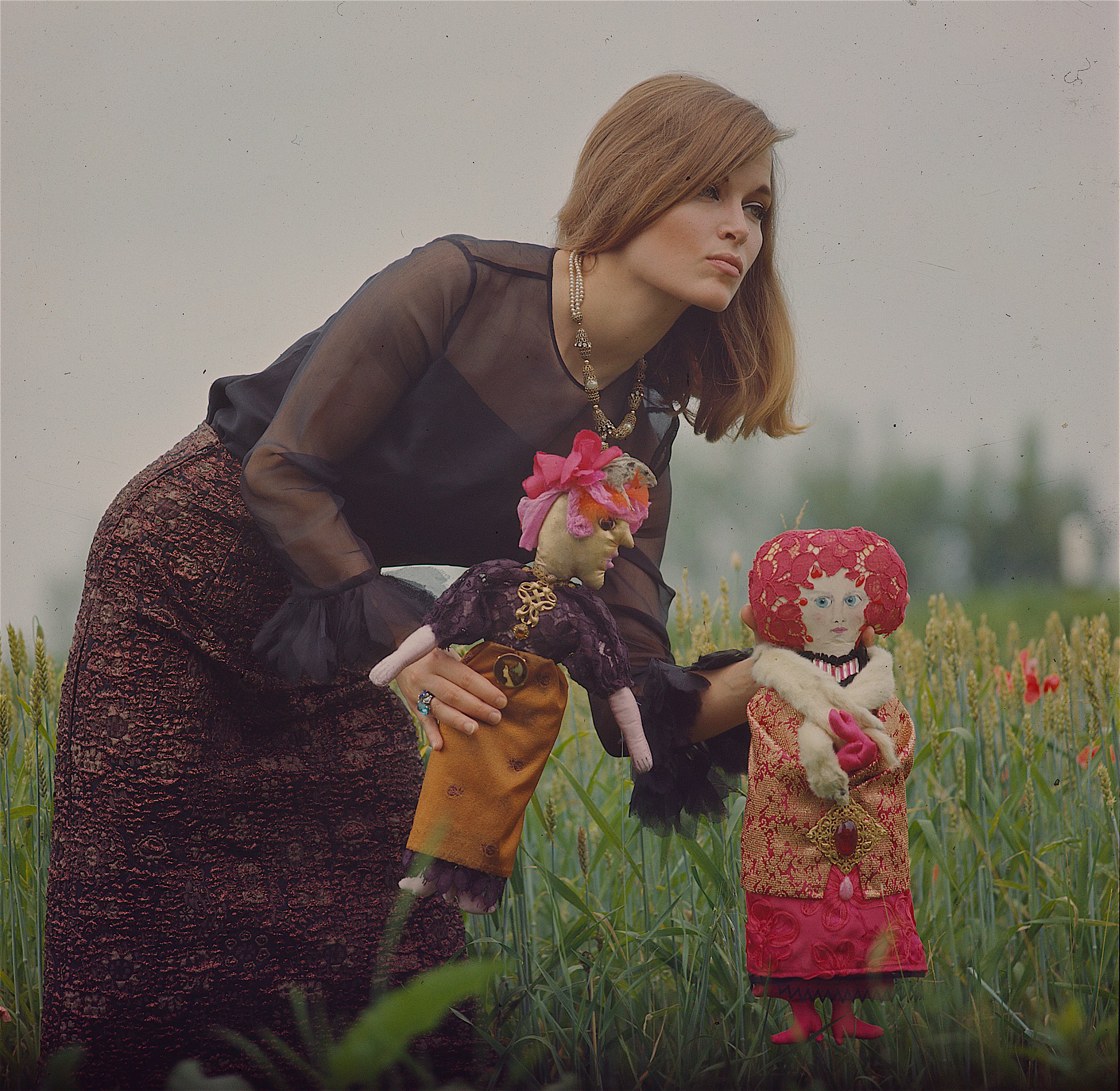
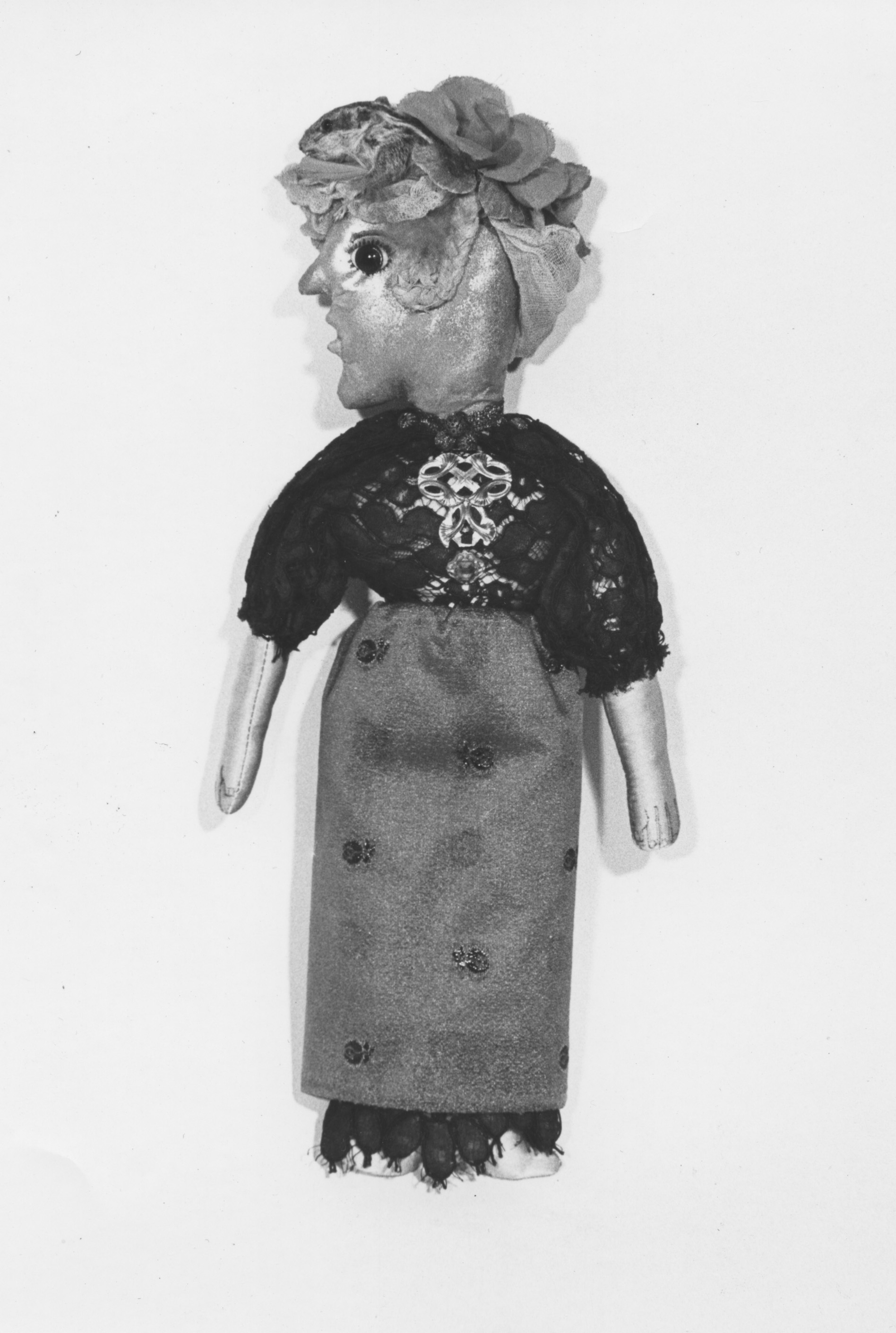
I received a package from the Museum returning one of the sculptures. This  “Pupazzo”  had a mouse on it’s head, which I had bought in an antique shop and put on the sculpture as a hat. It was a “real” mouse done by a taxidermist.  The letter from the Smithsonian explained to me that they had to take this particular piece out, because several visitors had screamed  while noticing it.


IRENA-MARTENS-Pupazzo-w.mouse-

HARPER’S BAZAAR Capsule review “Not To Be Missed”

By Articles, Reviews

HARPER’S BAZAARHARPER'S-BAZAAR-Not-To-Be-Missed-Jeri-Trotta-1-

1965

Capsule review

“Not To Be Missed”

Geri Trotta


  The curious one-of-a-kind people-dolls—collector’s items , definitely not for children – Designed and sewn in silks and satins by Irena Martens, a young Hamburg Lorelei, here for her show at the Castagno Gallery.


Irena-Martens-Pupazzo- 15---3- Irena-Martens-w-Pupazzo-Silverman-2-

Frankfurter Allgemeine Zeitung

By Articles

Frankfurter Allgemeine ZeitungFrankfurter-Allgemeine-1-

December  1965

Fritz Neugass


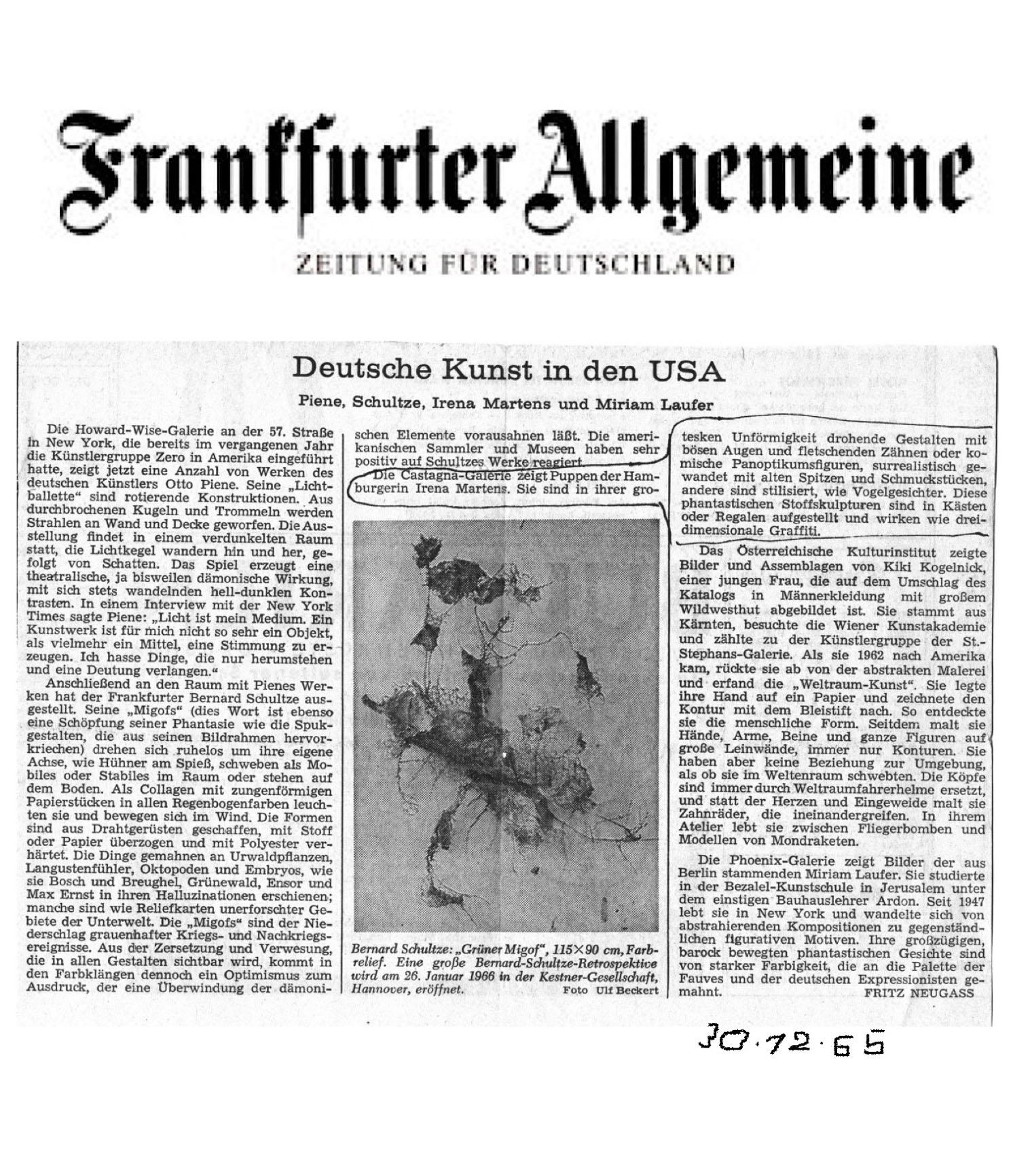
Die Castagno Gallery zeigt Puppen der Hamburgerin Irena Martens. Sie sind in ihrer grotesken Unfoermigkeit drohende Gestalten mit boesen Augen und fletschenden Zaehnen oder komische  Panoptikumsfiguren, surrealistisch gewandelt mit Spitzen und Schmuckstueckchen, andere sind stilisiert, wie Vogelgesichter. Diese fantastischen Stoffsculpturen sind in Kaesten aoder Regalen aufgestellt und wirken wie dreidimensionale Graffiti.


Irena-Martens-Pupazzo-4-

Irena-Martens-Pupazzo-in-Brocade-2-Irena-Martens-Pupazzo8--3--


New York Herald Tribune – Review

By Articles, Reviews

NYHerald-Tribune-1-John Gruen


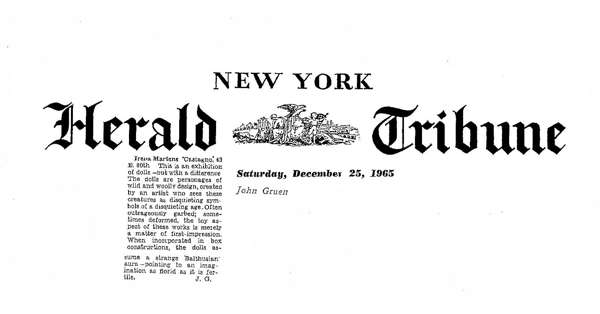
  Irena Martens “Castagno “, 43 E. 80th 

This is an exhibition of dolls –but with a difference  The dolls are personages of wild and woolly design, Created by an artist who sees these creatures as disquieting symbols of a disquieting age. Often outrageously garbed; sometimes deformed, the toy aspect  f these works is simply  a matter of first-impression. When incorporated  in box  constructions, the dolls assume a strange “Balthusian” aura- pointing to an imagination as florid as it is fertile.

Irena-Martens-Pupazzo-walking-2-Irena-Martens-Box-9HEADS-4 Irena-Martens-Pupazzo-wrapped-with-fox-3-